

Understanding CPAP Titration Study: What to Expect and How to Prepare
Learn what happens during a CPAP titration study, how to prepare, and how your clinician uses the results to plan therapy.
By EASYLONGER · Mar 14, 2025 ·
Quick answer: Use this guide for education and for preparing questions for your clinician. Sleep-apnea symptoms, diagnosis, PAP settings, and treatment decisions should be reviewed with a qualified healthcare professional.

A CPAP titration study helps identify suitable PAP settings. It is one route to starting treatment; some adults with OSA and no significant comorbidities can instead start clinician-managed APAP at home. Hypoventilation or low oxygen may require a different assessment and treatment plan.
What Is a CPAP Titration Study?
A titration study usually takes place in a sleep facility. A technologist monitors breathing and adjusts PAP under a clinical protocol. A split-night study can combine diagnosis and titration when the findings and time available make that appropriate.
Preparing for a CPAP Titration Study
To ensure accurate results, you should prepare for your CPAP titration study by following these guidelines:
- Stick to your regular daily routine as much as possible.
- Avoid napping during the day.
- Avoid caffeine in the afternoon.
- Do not use hair sprays or gels that might interfere with sleep sensors.
- Consult with your doctor regarding any medications you are taking.
Bring the items requested by the sleep center, such as sleepwear, toiletries and a medication list. Check its guest, caregiver and accessibility policies in advance.
What Happens During a CPAP Titration Study?
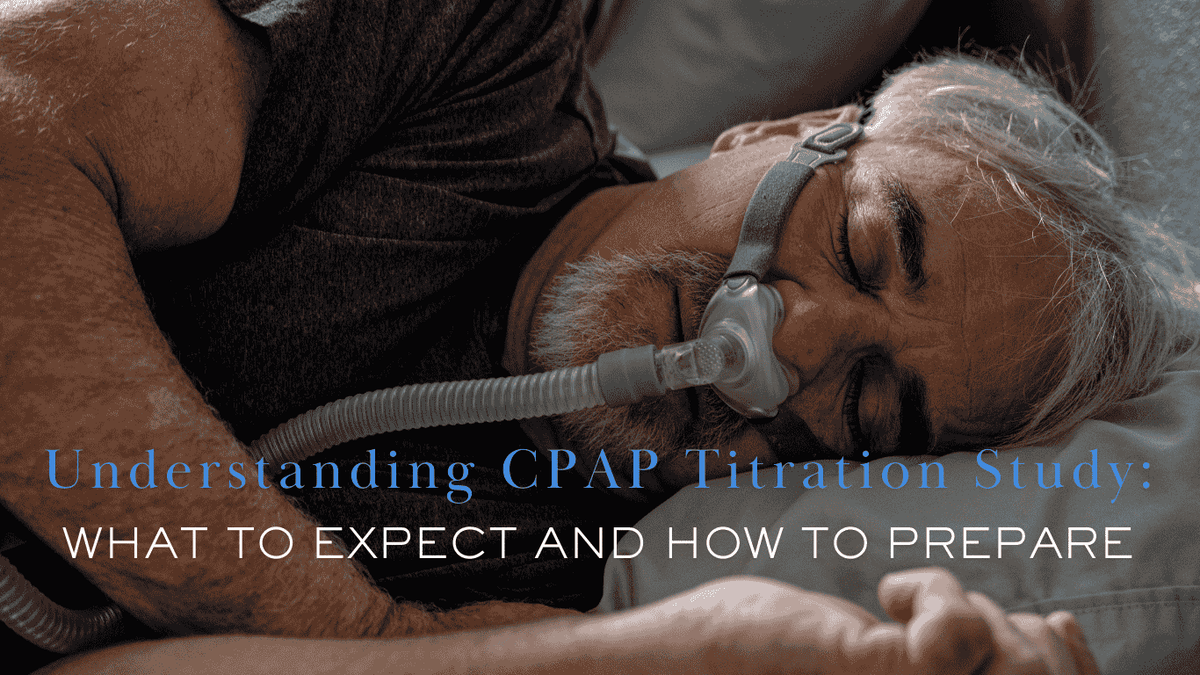
Upon arrival at the sleep study facility, a sleep technologist will fit you with a CPAP mask connected to a machine that supplies pressurized air. The fitting process ensures the mask is comfortable and properly sealed. Sensors will be attached to monitor your sleep patterns, breathing, heart rate, oxygen levels, and body movements. The CPAP pressure will start at a low level and gradually increase throughout the night until an optimal setting is found to prevent breathing disruptions.
Reviewing CPAP Titration Study Results
After the study, a sleep specialist will analyze the recorded data to determine the most effective CPAP pressure settings. The results will be shared with you, and your doctor will provide instructions on obtaining and using a CPAP machine at home.
When Is a Follow-Up Needed?
In some cases, the initial titration study may not find the ideal pressure settings. If the CPAP treatment does not seem effective, your doctor may recommend an auto-adjusting CPAP machine or another titration study. Adjustments may also be needed for mask fit, pressure levels, or humidity settings to improve comfort and effectiveness.
A CPAP titration study plays a crucial role in ensuring that CPAP therapy provides the intended benefits, improving sleep quality and overall health.
This article draws on the AASM PAP-treatment guideline and NHLBI sleep-study information.
For travel or outage planning after treatment setup, check any CPAP battery against your prescribed machine, cable and required runtime. A battery supplies power; it does not determine treatment settings.
When to involve your care team
Contact your sleep clinician or equipment provider if symptoms continue, your mask leaks, treatment feels uncomfortable, or you are considering pressure or therapy changes. Do not use a blog post as a substitute for diagnosis or individualized medical advice.
Continue learning
Review the sleep-apnea library and the CPAP-therapy library for related education and practical questions to discuss with your care team.
Run the numbers for your CPAP.
Pick your machine and settings. The calculator shows nights for every battery.
Keep reading
 CPAP & sleep health
Is Your CPAP Pressure Too High? Signs and When to Contact Your Clinician
Recognize CPAP discomfort, check mask and equipment issues, and prepare useful observations for your clinician without changing prescribed pressure.
May 4, 2026 CPAP & sleep health
Everything You Need to Know About CPAP Therapy for Sleep Apnea
Learn how CPAP treats obstructive sleep apnea, what benefits and side effects to expect, and how to plan compatible backup power.
Feb 20, 2025 CPAP & sleep health
Are Micro CPAP Machines Real? What You Need to Know About Maskless Sleep Apnea Solutions
Understand the difference between maskless micro-CPAP claims and prescription travel CPAP machines, and what to verify before buying.
Jan 2, 2025