

Just Diagnosed with Sleep Apnea? Here’s What You Need to Know About CPAP Batteries
New to CPAP batteries? Compare compatibility, capacity, charging and included cables before preparing for an outage or trip.
By EASYLONGER · Nov 30, 2025 ·

Quick answer: Use this guide for education and for preparing questions for your clinician. Sleep-apnea symptoms, diagnosis, PAP settings, and treatment decisions should be reviewed with a qualified healthcare professional.

Being diagnosed with sleep apnea can feel overwhelming. New CPAP users often worry about equipment, setup, and how to avoid missing a night of therapy—during power outages, travel, or camping. You are not alone. Millions start CPAP every year, and understanding a key part of the setup—a dependable CPAP battery—means one less thing to worry about.
Why New CPAP Users Should Consider a CPAP Battery
Beyond the machine, mask, and hose, a battery answers real-world “what ifs”:
- The power goes out during a storm.
- You want to travel or camp off-grid.
- You simply want backup to feel secure.
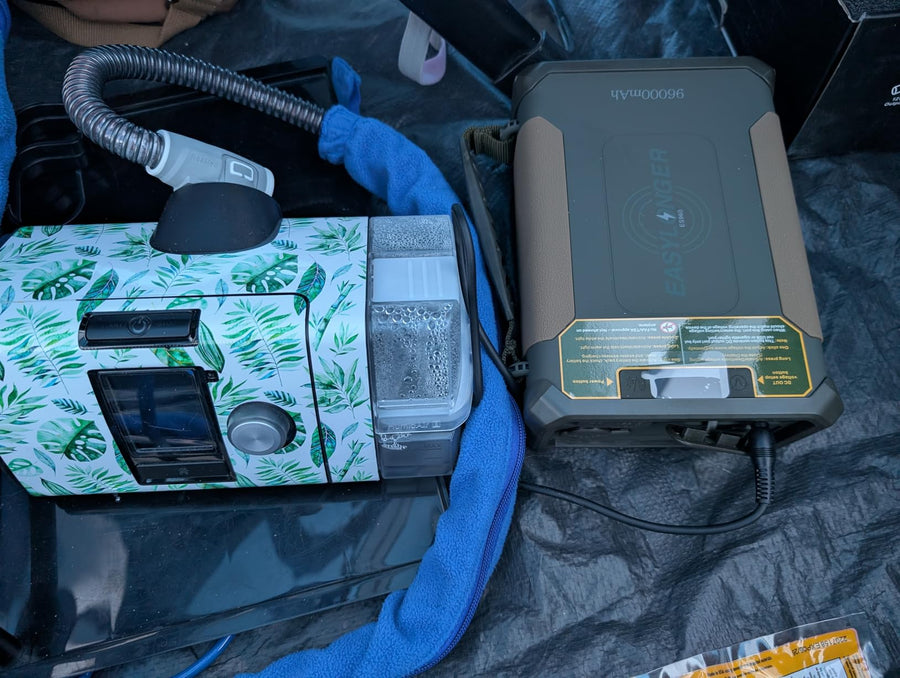
A reliable CPAP battery for beginners can provide tested backup power for a compatible machine while you establish your routine.
What to Look for When Choosing a CPAP Battery
1) Compatibility
Pick a battery that supports your model (e.g., ResMed AirSense 10/11, AirMini, AirCurve, Philips DreamStation/2, Luna G3). Brands like EASYLONGER include multiple DC cables for broad compatibility.
2) Battery Capacity
Capacity (Wh) helps estimate runtime alongside the complete machine load:
- 148–266Wh: compare capacity with the measured draw of the complete setup; do not treat it as a fixed night count.
- 297Wh+: Better for longer outages or multi-night camping.
Tip: If appropriate for your therapy, compare heat settings at home and choose capacity for the settings you can actually use.
3) Portability
Traveling light? Consider a compact option like the EASYLONGER ES400 AIR.
4) Safety Features
Look for overcharge, short-circuit, and temperature protections. LiFePO4 cells (e.g., EASYLONGER ES960) are safer and last up to 3,000 cycles.
5) Recharging Options
Choose batteries with multiple ways to recharge: wall charger, car charger, and solar panel.
Recommended Beginner-Friendly CPAP Batteries
Three EASYLONGER options for new users:
- ES400 AIR (148Wh): Weekend camping, RV trips; lightweight; pass-through charging.
- ES720 (266.4Wh): Home backup and outdoor trips; adjustable voltage, LED light, multi-device support.
- ES960 (297.6Wh): Long-term backup and emergencies; high capacity, wireless charging, LiFePO4 chemistry.
All three are potentially reimbursable through an HSA or FSA only after plan-administrator confirmation and available on Amazon US.
Final Tips for New CPAP Users
- Practice makes perfect: Getting used to CPAP takes time—be patient.
- Prepare ahead: A CPAP battery backup boosts confidence in outages or trips.
- Ask questions: Consult your sleep specialist or equipment provider about compatibility.
Starting CPAP is a big step toward better health. With the right tools—including a reliable CPAP battery—you can prepare for common power interruptions and travel needs.
Need help picking the right battery? Check out the EASYLONGER CPAP battery lineup and make your first CPAP experience smooth and stress-free.
References
- American Sleep Apnea Association: Sleep Apnea Information
- CPAP.com Blog: CPAP While Camping
- FAA: lithium battery travel rules
When to involve your care team
Contact your sleep clinician or equipment provider if symptoms continue, your mask leaks, treatment feels uncomfortable, or you are considering pressure or therapy changes. Do not use a blog post as a substitute for diagnosis or individualized medical advice.
Continue learning
Review the sleep-apnea library and the CPAP-therapy library for related education and practical questions to discuss with your care team.
Run the numbers for your CPAP.
Pick your machine and settings. The calculator shows nights for every battery.
Keep reading
 Buying guides
CPAP Battery Guide: Choose Backup Power
Choose a CPAP battery around your machine, cable, comfort settings and recharge access. Compare capacity and travel limits before buying.
Sep 7, 2026 Buying guides
CPAP Battery Backup: The Complete Guide for 2026
Choose a CPAP battery backup by exact machine requirements, cable and tested runtime. Compare options for outages, camping, road trips and air travel.
Apr 8, 2026 Buying guides
EASYLONGER ES720: CPAP Battery Backup for Home and Camp
Explore ES720 capacity, included cables and charging options for a familiar, tested CPAP backup setup at home or on the road.
Mar 19, 2025