

CPAP Guide: The Key to Better Sleep Quality
Review CPAP equipment basics and the role of a compatible ES960 backup battery for home outages and off-grid use.
By EASYLONGER · Mar 14, 2025 ·
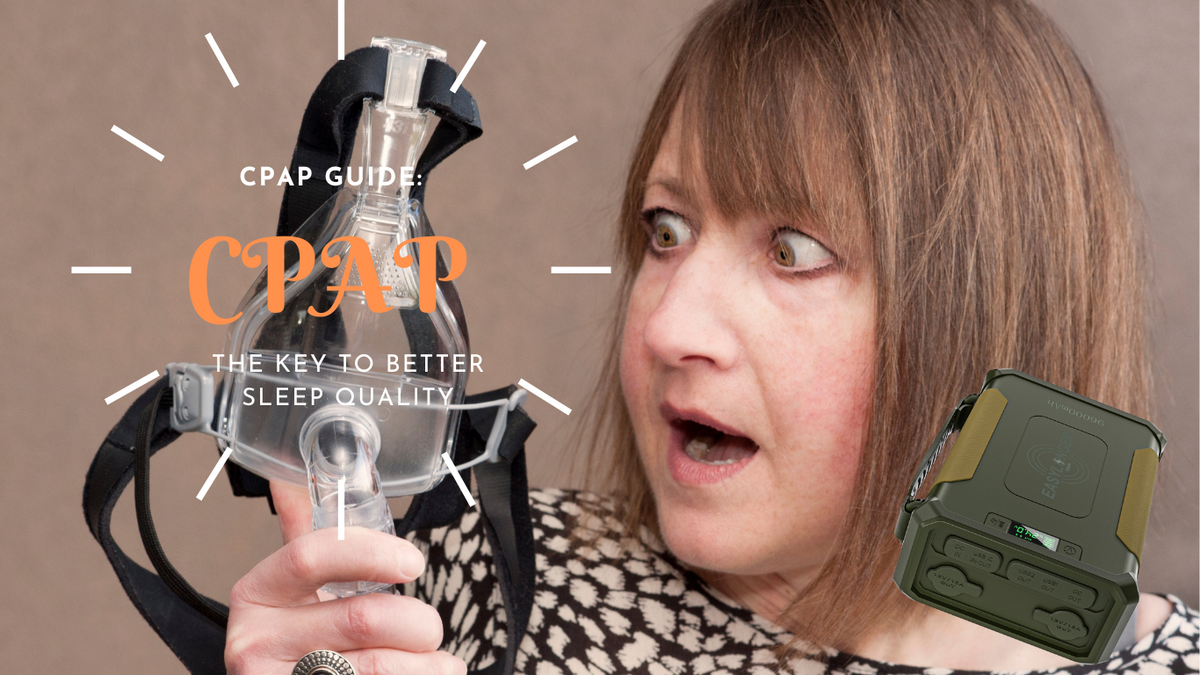
Quick answer: Use this guide for education and for preparing questions for your clinician. Sleep-apnea symptoms, diagnosis, PAP settings, and treatment decisions should be reviewed with a qualified healthcare professional.
Use the article as a conversation guide
Note the symptoms, equipment issues, or questions that apply to you, then review them with your clinician or equipment provider. Individual treatment decisions depend on your diagnosis and prescribed setup.

Sleep apnea is a common but serious sleep disorder that causes breathing to repeatedly stop and start during sleep. Continuous Positive Airway Pressure (CPAP) therapy is an effective treatment that helps keep the airway open and improves sleep quality.
What is CPAP?
CPAP (Continuous Positive Airway Pressure) is a device that delivers a continuous stream of air through a mask to keep the airway from collapsing during sleep. CPAP devices typically consist of a main unit, humidifier, tubing, and mask, making them suitable for patients with moderate to severe sleep apnea.
Main Benefits of CPAP
- Improves Sleep Quality: CPAP reduces nighttime awakenings, allowing users to achieve deeper sleep.
- Reduces Daytime Fatigue: Since sleep apnea disrupts sleep, users often feel tired during the day. CPAP therapy can alleviate this issue, improving focus and productivity.
- Lowers Health Risks: Untreated sleep apnea increases the risk of high blood pressure, heart disease, and stroke. Using CPAP can reduce health concerns.
- Minimizes Snoring: Snoring is a sign of partial airway obstruction. CPAP effectively reduces or eliminates snoring.
How to Choose the Right CPAP Device
When selecting a CPAP device, consider the following factors:
- Pressure Adjustment: Some devices offer automatic pressure adjustment to adapt to the user's breathing needs.
- Comfort: A well-fitting mask and humidification features enhance comfort.
- Portability: For frequent travelers, choosing a lightweight CPAP device with a CPAP battery is beneficial.
Daily Maintenance of CPAP Equipment
- Regularly clean the mask and tubing: Prevent bacterial buildup.
- Check the filters: Ensure good air quality.
- Replace components periodically: Swap masks and tubing to maintain optimal performance.
Why is a CPAP Battery Important?
CPAP devices typically require a power source, and in situations like outdoor camping, long-distance travel, or power outages, having an efficient CPAP battery is crucial. A high-quality CPAP battery provides:
- Portable power supply: Enables CPAP use anywhere without relying on a fixed power source.
- Longer reserve: Choose enough capacity for the required hours with your normal settings, then verify it in an overnight test.
- Multiple recharging options: Supports solar charging, car charging, and AC adapter charging for use in different environments.
- Compatibility: check that the battery lists your CPAP brand and model.
Off-Grid CPAP Battery Solution
For users needing CPAP therapy in off-grid environments, we recommend the Off-Grid CPAP Battery:
- Includes four CPAP DC cables: Compatible with ResMed S9, AirSense 10, AirSense 11, AirCurve 10, AirCurve 11, AirMini, Philips DreamStation, DreamStation 2, and Luna G3 (heated tube not supported).
- 297.6Wh high capacity: The ES960 supports multi-night planning with heated humidification and tubing off. The product page lists about 3 nights at 8.4W (an AirSense 10 at 6 cmH2O with the humidifier and heated tube off, 8 hours a night). Higher pressure means fewer nights.
- Check unlisted models individually: For a Sefam, Resvent, Apex or other machine not explicitly listed in the battery’s compatibility table, confirm the exact model and a documented connection before use. A 24V setting and similar barrel-plug dimensions do not establish compatibility.
- Plan the supported power route: Some machines require a model-specific DC converter; others need their original AC adapter and a suitably rated AC source. Confirm the converter input range, machine-side voltage, polarity, connector and power requirement. Do not treat a cigarette-lighter adapter as a universal solution.
- Other devices: Use the supported USB, DC, car-socket, or wireless-charging output for compatible equipment. Check the rating of each port and keep enough energy reserved for the CPAP; one output’s 180W rating does not apply to every port.
- Safe and stable: The ES960 uses LiFePO4 cells and a battery-management system. These features support safe operation but do not make a battery fireproof; follow its charging, ventilation, storage, and temperature instructions.
-
Three recharge options:
- Charge with a 60W Type-C PD charger (6-8 hours to full).
- Charge with the included 72W AC adapter (5-6 hours to full).
- Use a solar panel with 100W or more output (sold separately).
Understand the ES960 Charging and Output Ports
The ES960 described above is a 297.6Wh battery. It provides DC and USB outputs for compatible equipment; its AC charging adapter is an input accessory, not a built-in AC outlet. Confirm any additional converter needed for a machine outside the included cable list.
Consistently using a CPAP device can significantly improve sleep quality and overall health. If you or a loved one experiences sleep apnea symptoms, consult a doctor and consider CPAP therapy. Additionally, having a reliable CPAP battery can provide backup power only within the tested compatible setup and supported operating conditions, as part of a practical outage plan.
Some content in this article is referenced from the Sleep Education website (https://sleepeducation.org/patients/cpap/).
When to involve your care team
Contact your sleep clinician or equipment provider if symptoms continue, your mask leaks, treatment feels uncomfortable, or you are considering pressure or therapy changes. Do not use a blog post as a substitute for diagnosis or individualized medical advice.
Continue learning
Review the sleep-apnea library and the CPAP-therapy library for related education and practical questions to discuss with your care team.
Run the numbers for your CPAP.
Pick your machine and settings. The calculator shows nights for every battery.
Keep reading
 CPAP & sleep health
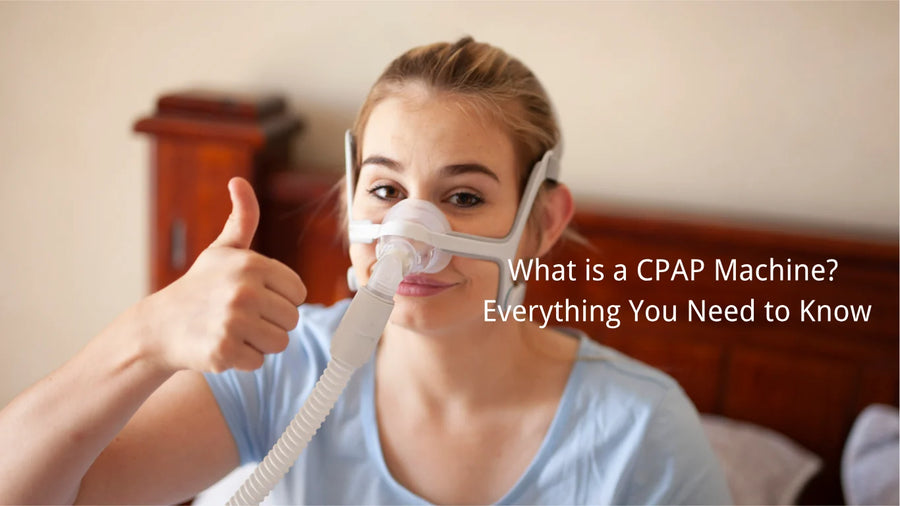
What is a CPAP Machine? Everything You Need to Know
Learn how a CPAP machine keeps the airway open, how its main components work, and where compatible backup power fits into your routine.
Feb 20, 2025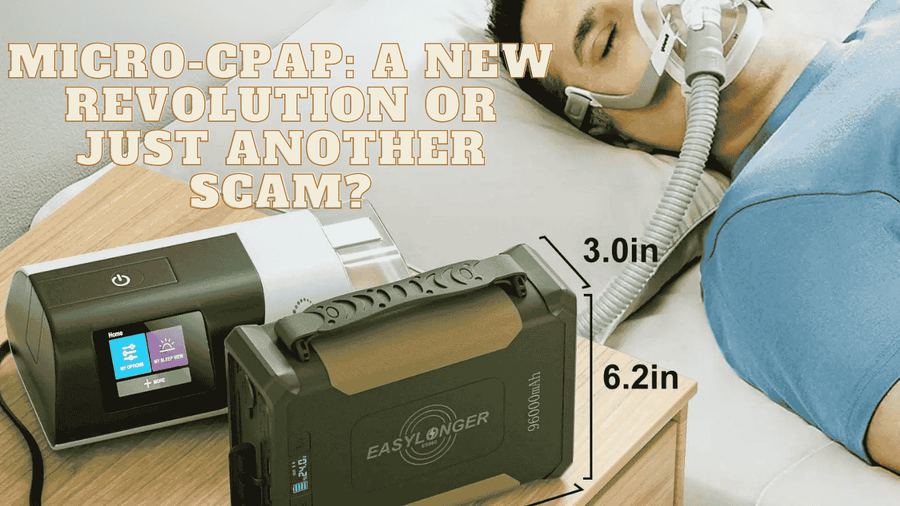 CPAP & sleep health
Micro-CPAP Claims: What to Verify Before Buying
Learn what to check behind micro-CPAP claims and how a documented travel CPAP system differs from a battery that powers your existing machine.
Jan 19, 2025 CPAP & sleep health
The Top Sleep Apnea Apps You Might Be Overlooking
Compare sleep-tracking and CPAP companion apps, understand what their scores mean, and learn which information is useful to discuss with your clinician.
Jan 2, 2025