

LiFePO4 and the EASYLONGER ES960: Capacity, Care and Long-Term Use
Understand ES960 LiFePO4 capacity, cycle ratings, charging care and battery recycling without confusing research claims with product specifications.
By EASYLONGER · Nov 19, 2025 ·
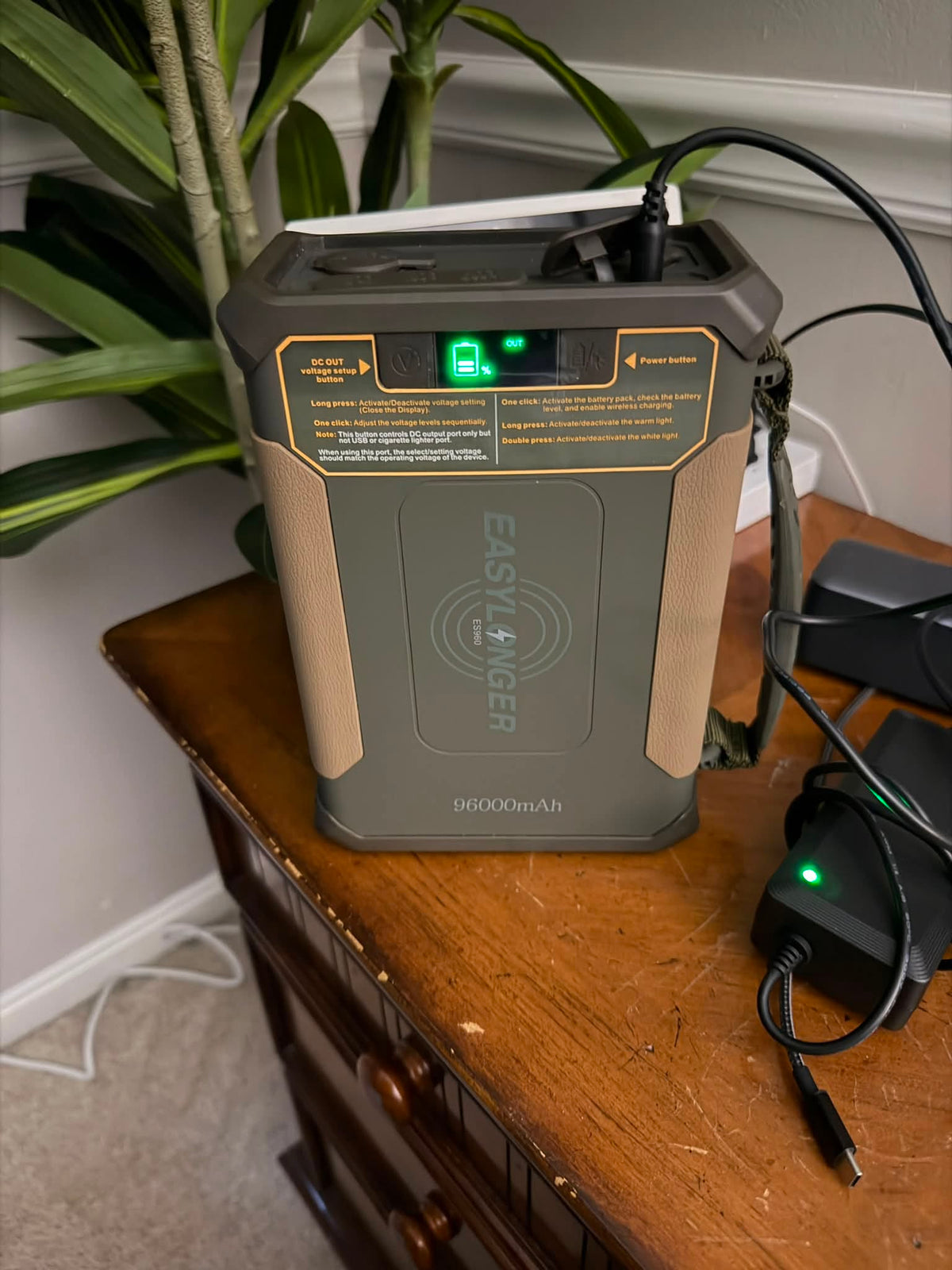
Quick answer: Match the battery to your PAP model, required voltage, humidifier use, runtime target, and travel plan. Confirm compatibility before relying on any battery overnight.
Decide from compatibility, not capacity alone
Confirm the PAP model, voltage, connector, normal settings, and intended use. A larger watt-hour rating does not correct an incompatible cable or output setting.

The EASYLONGER ES960 uses LiFePO4 cells for CPAP backup, camping and road travel. Chemistry is one part of the decision: also compare capacity, supported connections, charging limits and long-term care.
1. Fast Charging: Ready for Adventure
The EASYLONGER ES960 CPAP battery charges from the 72W AC adapter in about 5–6 hours, from a 60W USB-C PD charger in about 6–8 hours, or from a 100W or larger solar panel (18–24V).
Charging speed depends on the ES960’s supported input, charger output, cable and temperature. Use the specified AC or USB-C PD charger, or a compatible solar input; a higher-rated panel does not bypass the battery’s input limit.
Key Features:
- Dual charging modes: AC adapter (5–6 hours) or solar (18–24V, 100W+).
- Pass-through charging: Charge the battery while it powers CPAP or other devices.
2. Thermal Stability and Operating Limits
LiFePO4 is a lithium-ion chemistry used for its thermal stability and cycle life. Safe operation still depends on the complete pack design, charger, environment and condition. Follow the ES960 manual’s separate charging, operating and storage limits, and do not use a damaged, swollen or wet battery.
3. Eco-Friendly Power: Sustainable and Green
The ES960 CPAP battery uses cobalt- and nickel-free LiFePO4, making it cleaner and longer-lived, reducing waste.
At end of life, take the battery to a qualified battery or electronics collection program. Do not place it in household rubbish or curbside recycling; protect the terminals and ask the collection facility how it accepts the pack.
Practical Long-Term Care:
- Cycle life: The ES960 is rated for up to 3,000 cycles under its specified conditions. A cycle rating is not a promise of 10 years of daily full cycling; charging habits, temperature and calendar age also matter.
- End-of-life handling: Use an appropriate battery collection service and follow its packing instructions.
4. Capacity and the Complete CPAP Load
The ES960 stores 297.6Wh. Runtime is determined by the connected CPAP and settings as well as usable capacity. Keep the published machine-specific runtime conditions with the figure, and verify your own normal sleep setup before a trip.
Other Great Features:
- Multiple device compatibility: Seven ports (including wireless) for phones, laptops, and small appliances.
- Off-grid power: Ideal for outdoor adventures or emergency backup.
5. Versatility for Modern Lifestyles
Optimized for CPAP machines yet ready for more—backup during outages, camping power, or solar-ready integration. The ES960 is a flexible, reliable power hub.
6. What to Check Before Choosing
Battery research continues to improve materials and management systems, but a research paper does not establish that a retail model contains those technologies. For this ES960, make the purchase decision from its documented capacity, outputs, charging options and warranty.
Conclusion: A Battery Built for the Future
The ES960 combines LiFePO4 cells, 297.6Wh capacity and several charging options. Match the cable and output to your CPAP, keep a record of your normal runtime, and follow the manual for charging and storage so the battery is ready when you need it.
Product and recycling references
Check the current EASYLONGER ES960 manual and support information for model-specific limits, and EPA battery recycling guidance for end-of-life handling.
Confirm compatibility before purchase
Match the exact PAP model and required voltage, then confirm the correct cable and expected runtime with your normal settings. Humidification and heated tube can materially reduce runtime.
Warranty and support
Purchases made on easylonger.com include a 5-year warranty. Purchases from other platforms include a 3-year warranty and may be upgraded to 5 years after eligible product registration on easylonger.com. Keep your order information and contact support@easylonger.com if you need setup help.
Run the numbers for your CPAP.
Pick your machine and settings. The calculator shows nights for every battery.
Keep reading
 Setup & care
CPAP Power Consumption: Watts and Runtime Guide
Understand CPAP watts, battery watt-hours, heating loads and planning reserves. Use a transparent example, then check your own setup safely.
Sep 27, 2026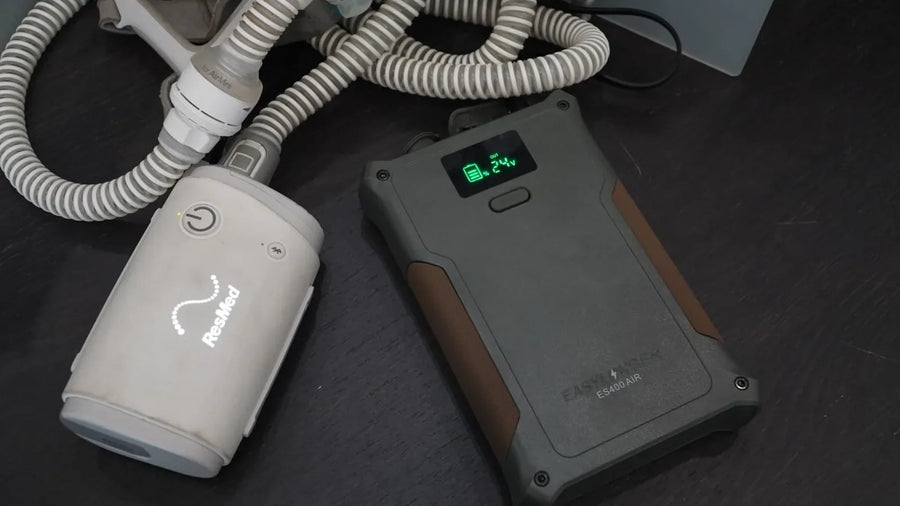 Setup & care
ResMed AirMini Battery Guide for Runtime and Travel
Choose an AirMini battery by its documented 24V cable path, tested reserve and trip rules. Separate battery carriage from permission to use the kit in flight.
Sep 24, 2026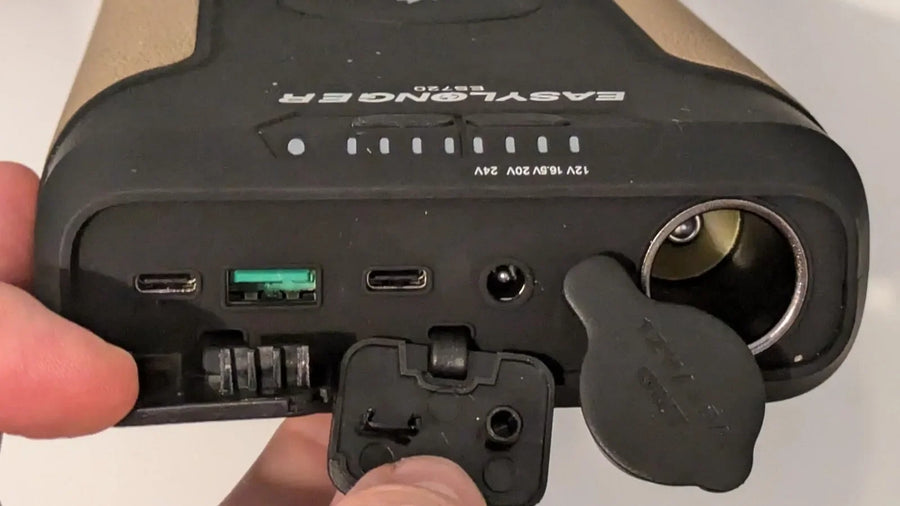 Setup & care
CPAP DC Power: AC vs DC Runtime and Cable Guide
Compare AC and DC CPAP power paths, check device-side voltage and cable requirements, and validate a battery setup before an outage or trip.
Sep 22, 2026