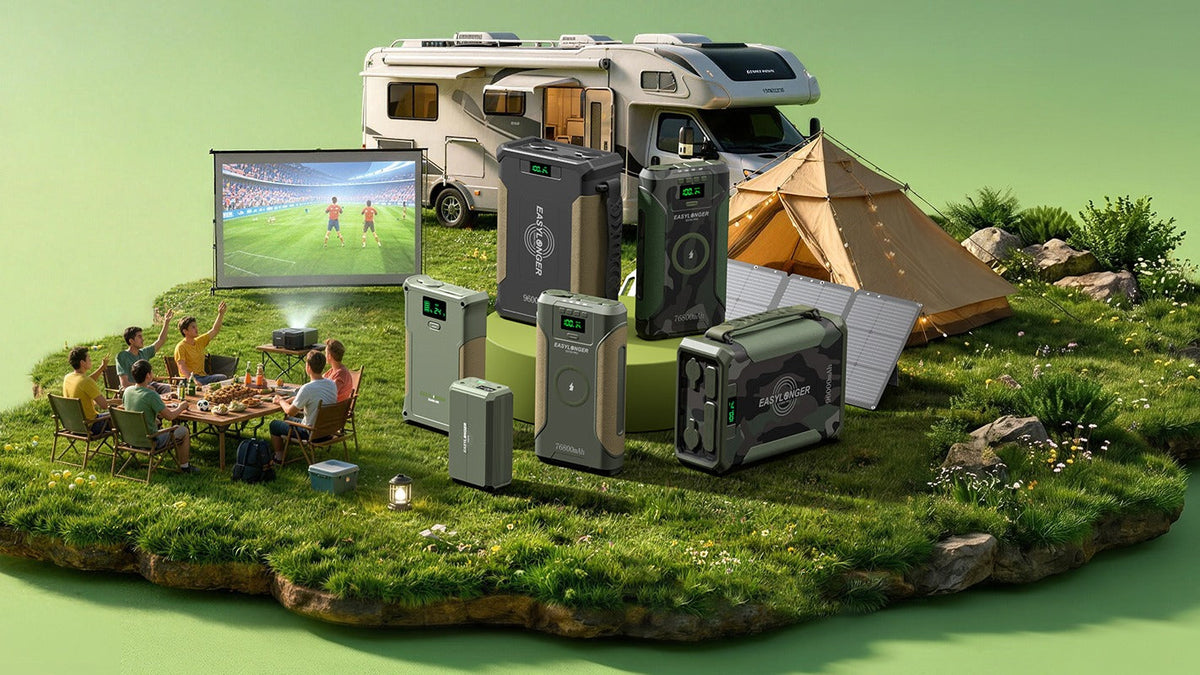
Prime Day is the one week a year these batteries drop 20% — but a discount on the wrong size is just a cheaper mistake. This guide gives you the exact framework we use with customers: real machine wattage, federal outage data, and a two-minute decision table, so the unit you add to cart on sale is the unit that actually carries you through the night.
Shop the Prime Day Deals → Get My Exact RuntimeWhy Prime Day Is the Moment to Fix This
If you rely on CPAP therapy, a power outage isn't an inconvenience — it's a night of interrupted breathing, a groggy, headache-filled morning, and for many people a genuine health risk. Most of the year, a quality CPAP battery sits at full price because it's a low-volume, purpose-built product. Prime Day is the rare window where the price comes down enough that "I should really get a backup" turns into "done." Buying now, before hurricane and winter-storm season peaks, means the battery is charged and waiting on the shelf the night you actually need it — not on a three-day shipping clock while the grid is down.
But here's the trap we watch customers fall into every sale: they sort by price, grab the cheapest unit, and discover in the first outage that it dies at 3 a.m. The discount felt like a win and the result was a worse night's sleep. The rest of this guide exists so that doesn't happen to you. Spend two minutes on the framework below, and the 20% you save on Prime Day is 20% off the right battery.
When the Wrong Size Quietly Costs You Sleep
Almost every "the battery died" story we hear isn't a defect. It's a sizing decision that looked fine on paper and failed at the bedside. They cluster into four traps — learn to spot them and you've already done the hard part.
The humidifier ambush
A ResMed AirSense 11 draws about 13W with humidification off — and roughly 51W with it on. The same battery that ran 17 hours suddenly runs about 4. It is the single most common cause of a 3 a.m. surprise, and it catches people who never thought to check.
Fix: run humidifier-off on battery power and use an HME (heat-and-moisture exchange) filter for comfort.
The mAh math trap
"40,000mAh" sounds bigger than "148Wh," but they can be the exact same battery. Runtime depends on watt-hours, not milliamp-hours: Wh = mAh × voltage ÷ 1000. Phone-bank marketing math makes correctly-rated CPAP batteries look like they under-deliver against inflated mAh numbers.
Fix: compare every battery in watt-hours (Wh) only. Ignore the mAh on the box.
Label vs usable capacity
Voltage conversion and the battery's own protection circuitry mean roughly 75% of the rated capacity actually reaches your machine. A "297.6Wh" pack delivers about 223Wh of real therapy. Brands that quote 100% look better on a spec sheet and worse at 4 a.m.
Fix: every runtime number on this page already builds in that 75%, so what you read is what you get.
One-night battery, five-night outage
The outage that actually threatens therapy isn't the two-hour evening blip — it's the multi-day weather event. Sizing for the average night instead of the bad week is exactly how people end up rationing sleep with a dying battery.
Fix: read the federal outage numbers below before you pick a size.
The 3-Question Framework
Three questions, answered in order. Your answers point straight to a size — no guessing, no spec-sheet archaeology.
Step 1 — What does YOUR machine actually draw?
The number on the battery box is meaningless until you know your machine's appetite. Here are the real figures we use in our runtime calculator, measured at a standard pressure of 10 cmH2O:
| Machine | Draw (P=10, humidifier off) | With heated humidifier | Connector |
|---|---|---|---|
| ResMed AirMini | ~7W | n/a (waterless / HME) | 12V DC |
| ResMed AirSense 11 | ~13W | ~51W | 24V DC |
| BMC Luna G3 | ~13W | ~49W | 24V DC |
| Philips DreamStation | ~14W | ~56W | 24V DC |
| ResMed S9 | ~14W | ~54W | 24V DC |
| ResMed AirSense 10 | ~15W | ~55W | 24V DC |
Each cmH2O of pressure above 10 adds roughly half a watt. The two things that move the number most are pressure and — far more dramatically — the heated humidifier. For exact numbers on your model and pressure, our runtime calculator does the math for you in about a minute.
Step 2 — How many nights must you cover?
Don't guess this one either — use the federal numbers. According to the U.S. Energy Information Administration, 2024 was the worst year for power reliability in over a decade:
The translation matters: the two-hour blip takes care of itself; the multi-day weather event is what you are actually sizing for. Here's how that maps to the three ways people use these batteries:
- Air travel: one night of therapy per flight leg — and the FAA's 100Wh carry-on threshold means only a battery at or under 100Wh boards a plane without airline approval.
- Camping & RV weekends: two to three nights away from any wall outlet.
- Home storm backup: at least two nights from the battery itself, plus a daytime recharge path for anything that runs longer.
Step 3 — What's your recharge access?
This is the question almost nobody asks, and it changes everything. A battery you can refill every day can cover an outage of any length; a battery you can't is just a countdown timer. There are three realistic recharge paths during an extended event:
- Wall power before the storm: top the battery to full while you still have grid power. The ES960 reaches a full charge in roughly 5–6 hours from its included wall adapter.
- Your vehicle: on the road or in the driveway, a 60W+ USB-C car charger refills the pack. (These units charge through an 18–24V input, so a plain 12V cigarette socket needs a USB-C charger or a 12V-to-DC adapter — not a direct DC plug.)
- Solar: a 100W+ folding solar panel can put back roughly a night's worth of CPAP energy during a sunny day, which turns a two-night battery into a system that runs as long as the sun keeps coming up.
If you live where outages stretch into days — hurricane country, ice-storm country, rural feeders — pairing a 266–297Wh battery with a daytime recharge path is the difference between "I have a backup" and "I have power for as long as this lasts."
The Decision Table
Find the row that sounds like you. The runtimes are real numbers for a ResMed AirSense 11 with the humidifier off, built on 75% usable capacity.
| Your situation | Right size | Pick | Nights (AirSense 11, humidifier off) |
|---|---|---|---|
| Frequent flyer / carry-on only | ≤100Wh | ES270 | most of 1 night (~5.7h) |
| Occasional travel + light backup | ~150Wh | ES400 AIR | 1 full night (~8.5h) |
| Budget camping / road trips | ~266Wh | ES720 | ~2 nights (~15.3h) |
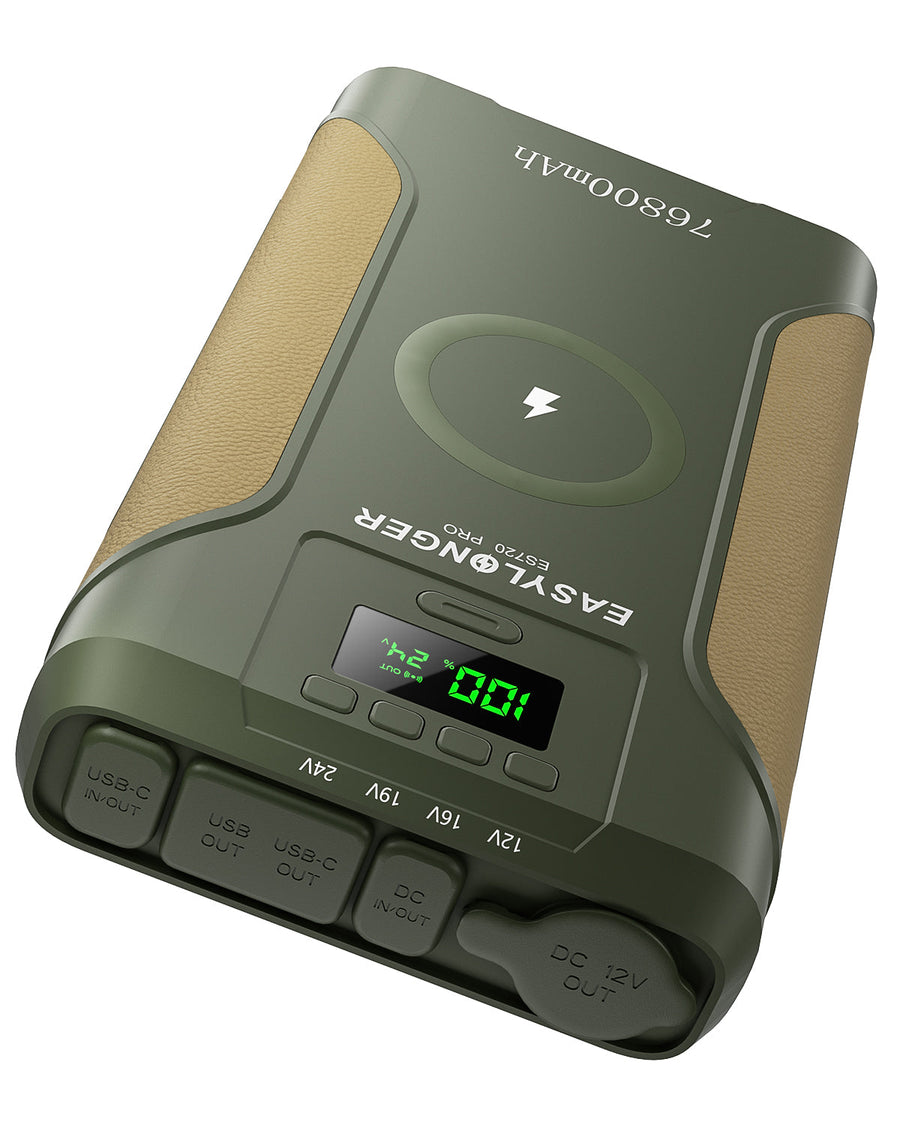
| Camper who wants 24V DC + wireless top | ~276Wh | ES720 PRO | ~2 nights (~15.9h) |
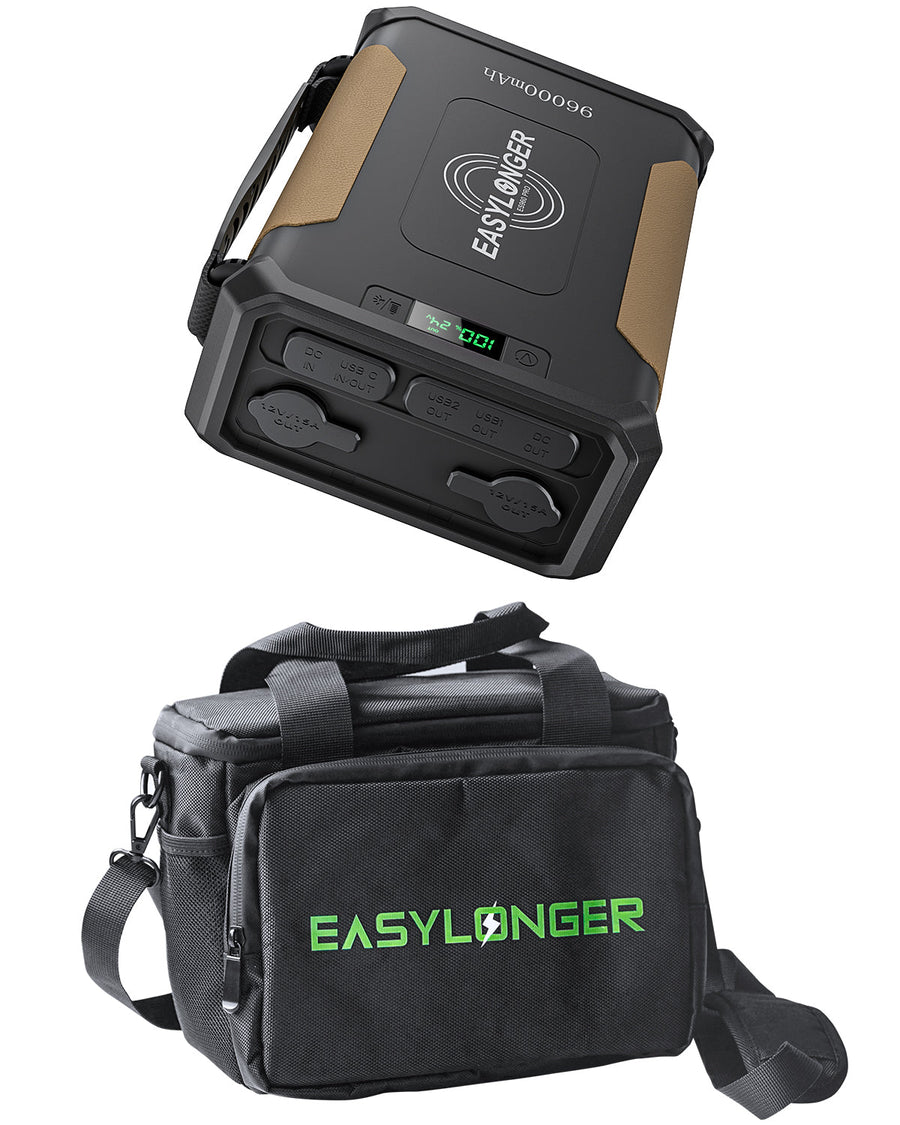
| Storm-season home backup (flagship) | ~298Wh | ES960 | ~2 nights (~17.1h) |
| Home backup + exact % readout, camo finish | ~298Wh | ES960 PRO Camo | ~2 nights (~17.1h) |
The Prime Day Lineup
Every price below is the regular price; the bracket shows what you pay with code PDSALE20 at checkout during June 23–26. One code per order, applied to anything in the store.


Every model powers your CPAP through a direct DC connection using the included cables for ResMed (S9, AirSense 10/AirCurve 10, AirMini/AirSense 11), Philips (DreamStation / DreamStation 2) and, on the PRO, BMC Luna machines — plus USB-A, USB-C, 12V sockets and a wireless charging pad for phones, tablets and laptops. Need an extra or replacement cable? The universal DC power cord is $42.99.
Chemistry & Safety, Decoded Honestly
There's a lot of fuzzy marketing in this category. Here's the straight version, by the actual spec sheets.
LiFePO4 vs lithium-ion — and which is which
The ES960 and ES960 PRO use LiFePO4 (lithium iron phosphate): rated around 3,000 charge cycles and prized for thermal stability — the chemistry you want sitting next to your bed for years. The travel and camping models — ES270, ES400 AIR, ES720, ES720 PRO — use high-quality lithium-ion to stay light and compact. Both are safe and protected; they're simply tuned for different jobs.
DC-direct, no inverter
These batteries power your CPAP straight from DC through the included cable — there's no AC wall outlet and no inverter in the path. That matters: a generic AC power station loses roughly 15–20% of its energy converting DC to AC and back. Skipping the inverter entirely means more therapy hours from the same watt-hours, and no waveform compatibility worries at all.
FAA 100Wh rule
Carry-on lithium batteries above 100Wh need airline approval; above 160Wh they can't fly as passenger baggage at all. The ES270 is built to 99.9Wh precisely to clear the no-paperwork threshold. The ES400 AIR (148Wh) can fly with airline approval; the 266Wh+ units are for ground and home use.
Completely silent
No fans, no compressor, no hum — 0 dB. The ES960 in particular runs dead silent at the bedside, with a simple four-bar level display so there's no glowing screen to disturb your sleep. (Prefer an exact number? The ES960 PRO shows a precise digital percentage.)
A Night on Backup, Hour by Hour
Here's what a real outage looks like for someone running an AirSense 11 (humidifier off) on an ES960:
A storm takes the line down. With the battery already plugged in beside the bed in pass-through (UPS) mode, the CPAP never even blinks — it switches to battery without missing a breath.
No fan noise, no glow. Four bars on the display. Therapy continues exactly as it does on grid power.
A full night of therapy used roughly half the pack. Still two-plus bars left and most of a second night in reserve.
Grid still down. A 100W folding solar panel on the porch puts a night's worth of energy back by late afternoon — ready for night two, and three, and as long as the sun keeps showing up.
What Real Owners Report
Match Your Life to a Size
The traveler
You fly a few times a year and want zero airport drama. The ES270 (99.9Wh) is the only size that boards carry-on with no airline paperwork — one charge covers most of a night, and pass-through mode lets you top it from the hotel outlet while you sleep.
The camper
Weekends off-grid, sometimes a long one. The ES720 gives the best dollar-per-night value; the ES720 PRO adds a 24V DC socket, a wireless charging top and pass-through power for two-night trips with phones and headlamps to keep alive too.
The home planner
You've watched the news enough times. The ES960 is the storm-season flagship — two nights of silent therapy per charge, LiFePO4 built for years of standby duty, and a recharge path (wall, car, or solar) so a multi-day outage never becomes a multi-day sleep problem.
Get the right size 20% off — then forget about outages
Use code PDSALE20 at checkout for 20% off any battery, June 23–26. Free U.S. shipping from California, 2-year warranty with registration.
Shop the Prime Day Deals Get My Exact RuntimeStuck between two sizes? Email support@easylonger.com — Brooks answers sizing questions personally.
FAQ
Is a 99.9Wh battery enough for home backup?
Can I take a 297Wh battery on a plane?
How long will a battery run my CPAP with the humidifier on?
What's the difference between mAh and Wh?
Do these have a regular AC wall outlet?
Are all EASYLONGER batteries LiFePO4?
Can the battery charge while powering my CPAP (UPS mode)?
How fast do these batteries recharge?
How many years will a LiFePO4 battery last?
Will these work with my ResMed, Philips, or Luna machine?
Can I use HSA/FSA funds for a CPAP battery?
Brooks is the founder of EASYLONGER. He builds silent backup power for CPAP users — and answers sizing emails personally, which is where this framework came from. Questions? support@easylonger.com.


Leave a comment
All comments are moderated before being published.
This site is protected by hCaptcha and the hCaptcha Privacy Policy and Terms of Service apply.