


Many people do not know whether they are allowed to bring power banks on planes or not. The airline industry is known for being very strict regarding the items allowed on board, and unfortunately, batteries in general and power banks, in particular, are not exempt from being regulated.
In short, power banks are allowed on planes, but they need to be under a specific capacity (100Wh) and they can only be taken in the carry-on luggage.
So how can I travel with CPAP on boarding?
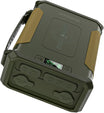
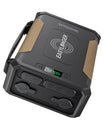
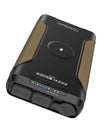
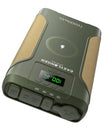
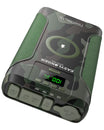
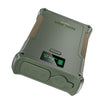
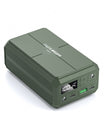
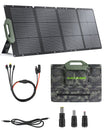
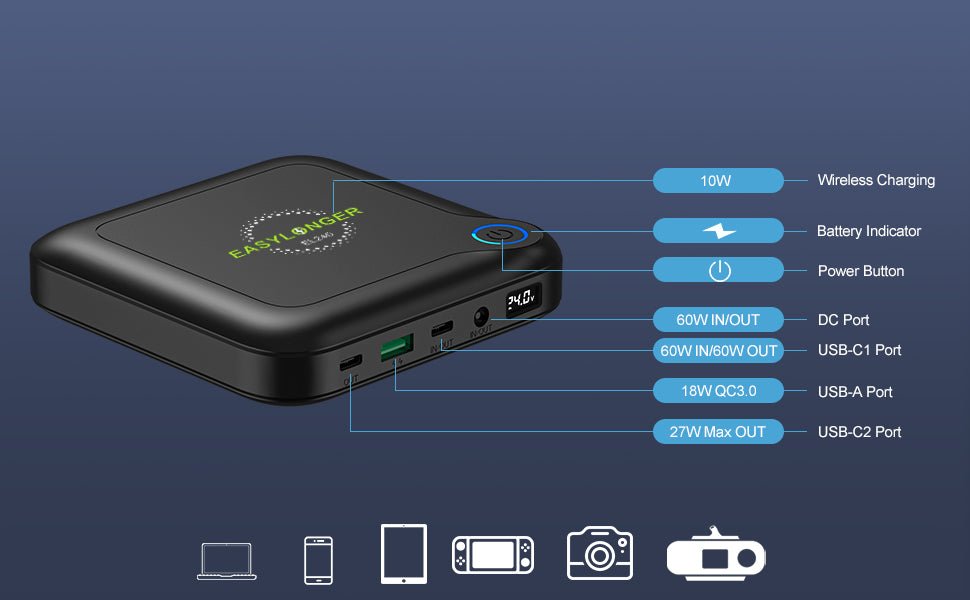
Here is our solution to the CPAP power emergency on the airplane - EASYLONGER EL240 (PD 60W CPAP Power Bank)
| Connector type | 2 x USB Type C, 1 x USB Type A, 1 x DC, 1 x Wireless charger |
| Product Name | EASYLONGER EL240 |
| Battery capacity | 3.7V/24000mAh/88.8Wh |
| Battery cell composition | Lithium Ion |
| Size | 23.3 x 15.7 x 3.7 cm/0.8 kg |
| Voltage | 20 Volts, 5 Volts, 9 Volts, 15 Volts, 12 Volts, 24 Volts |
Its capacity is 88.8Wh, which is under the 100 Wh. Then you can carry it freely on the airplane without CPAP machine power outage.
Or check it on Amazon: https://amzn.to/3yGPq87

FAA and TSA regulations regarding portable chargers
In the United States, the Transportation Security Administration and the Federal Aviation Administration, commonly known as the FAA and TSA respectively, have a mission to provide the safest, most efficient aerospace system and to protect the nation's transportation systems to ensure freedom of movement for people and commerce. They are the two regulating bodies that decide which types of items can go aboard planes, including power banks and other batteries. These are the rules they enforce:

-
Maximum capacity allowed: 100Wh (or up to 160Wh with special permits)
The FAA goes into precise details about taking power banks on planes: any battery that you take on board should not exceed 100Wh. External chargers or power banks are also considered to be a battery, and should not surpass a capacity of 27000mAh, or in other words, 100Wh. They also specify that batteries between 101Wh and 160Wh need airline approval, and anything above 160Wh is forbidden on the plane.
-
Power banks are to be transported in carry-on luggage only
The TSA is very straightforward when it comes to power banks. As stated, they are allowed in carry-on bags but not in checked-in bags. This rule is enforced because power banks can be hazardous and contain flammable materials, so there might be a risk of fire or even explosion during the flight. Logically, it's easier for crew members to put out the fire if the source is in the cabin rather than in the cargo area, as there are fire extinguishers.
Some passengers don't know if power banks are considered a lithium-ion battery or a lithium-ion battery contained in equipment. However, the U.S. TSA Pipeline and Security of Hazardous Materials Safety Administration describe power banks as "UN3480, Lithium-ion batteries" Thus, they must be transported accordingly.
Non-US airlines and international airports regulations for battery packs
If you are flying around Europe or Asia, the rules may differ from the ones in the USA. Therefore, you should check the rules of your airline company and on-route airports before your flight or even booking the ticket. For example, while it is commonly allowed to have power banks up to 160Wh capacity with you, some airlines may restrict the maximum level by 100Wh.
While the FAA is the governing body in the United States of domestic airlines, the International Air Transport Association (IATA) is a trade association of the world's airlines, which helps to formulate industry policies and standards.
According to the document "passengers traveling with lithium batteries", issued on February 2019, power banks are considered spare batteries, which must be individually protected from short-circuiting and carried in carry-on baggage only, regardless of the capacity. It is also stated that each passenger is limited to a maximum of 20 spare batteries of any type without approval, as long as their capacity is below or equal to 100Wh. The operator may approve the carriage of more than 20 batteries.
However, passengers are permitted a maximum of 2 power banks between 100 and 160Wh in carry-on baggage only, and those with power banks and batteries of capacity over 160Wh must prepare them to be carried in cargo, in accordance with the 60th Edition of the IATA Dangerous Goods Regulations (DGR).


Dejar un comentario
Todos los comentarios se revisan antes de su publicación.
Este sitio está protegido por hCaptcha y se aplican la Política de privacidad de hCaptcha y los Términos del servicio.