


If you fly with a CPAP machine, you've probably wondered which battery actually works on a plane. The TSA rules are confusing. Most batteries on Amazon are too large to be carried on. And finding real-world runtime data — not marketing fluff — is harder than it should be.
We tested our most compact CPAP batteries against the most popular CPAP machines, on flights of varying lengths, with and without humidifiers. Here's what we found, what we recommend, and exactly how to use a CPAP battery in the air.
The TSA Rule You Need to Memorize
Here's the rule that decides everything: lithium batteries with capacity under 100 watt-hours (Wh) can always go in your carry-on. No paperwork, no airline approval, no questions.
Between 100Wh and 160Wh, you need airline approval — call ahead, get verbal confirmation, and bring documentation if you can. Above 160Wh, the battery cannot fly on commercial aircraft, period.
Important: Lithium batteries always go in carry-on, never checked baggage. This applies to every airline globally.
Why Compact Matters: The Reality of Carry-On Space
If you've ever traveled with a CPAP, you know the kit takes space — machine, mask, hose, distilled water, charger. Add a battery to that, and your carry-on fills up fast.
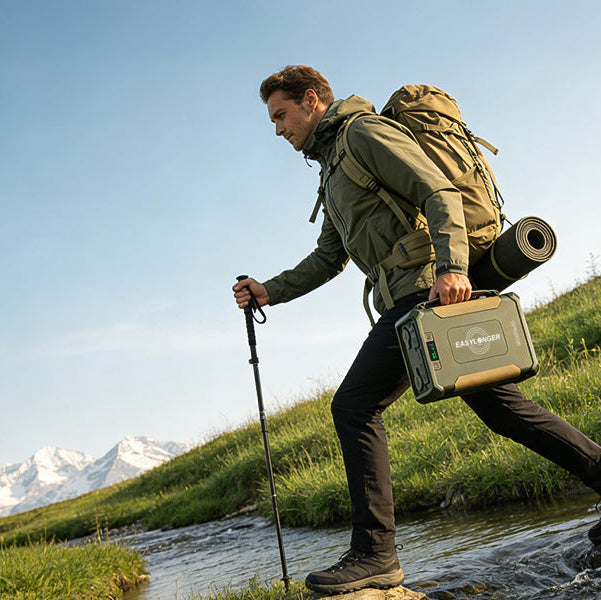
A compact battery is the only realistic option for most flyers. Anything bigger than a hardback book becomes a pain to pack and a hassle at security checks.

Our Testing Setup
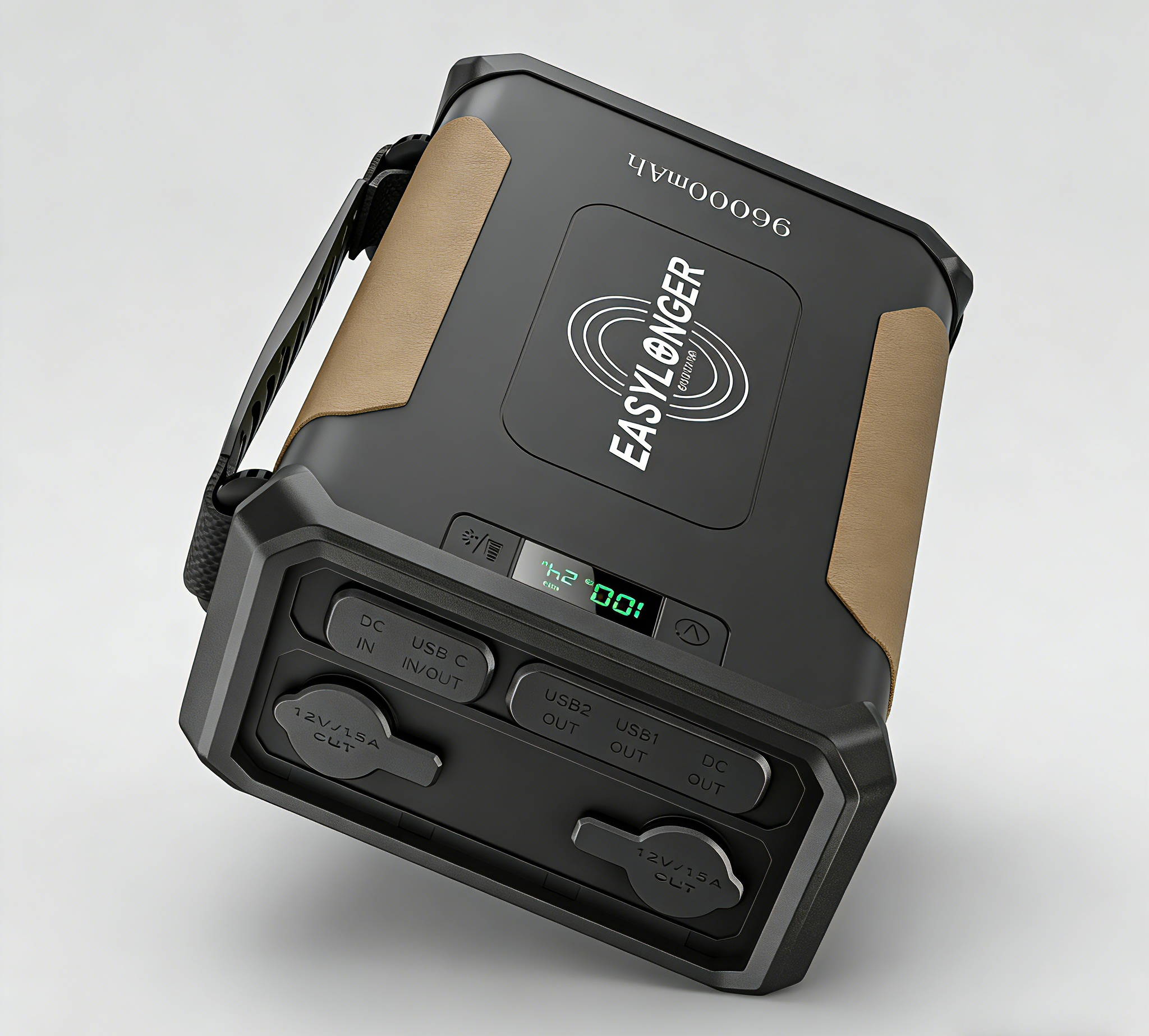
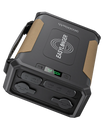
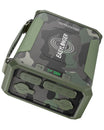
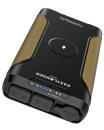
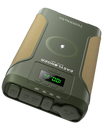
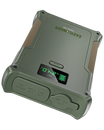
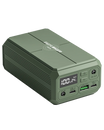
We tested two of our most compact models — the ES270 (99.9Wh, TSA-approved) and the ES400 AIR (148Wh, requires airline approval) — against three of the most popular CPAP machines:
- ResMed AirSense 11 (24V, 13W base / 51W with humidifier)
- ResMed AirMini (12V, 7W — no integrated humidifier)
- Philips DreamStation (24V, 14W base / 56W with humidifier)
Each test ran the CPAP at typical pressure settings (8–10 cmH2O) until the battery shut down naturally. We tested with humidifier off and humidifier on so you can see both scenarios.
Test Results: Real Runtime, Real Numbers
| Battery | Capacity | Weight | TSA Status |
|---|---|---|---|
| ES270 | 99.9Wh | 590g (1.3 lb) | ✓ Carry-on, no approval |
| ES400 AIR | 148Wh | 836g (1.8 lb) | ⚠ Airline approval required |
Runtime by Machine (humidifier off)
| CPAP Machine | ES270 (99.9Wh) | ES400 AIR (148Wh) |
|---|---|---|
| ResMed AirSense 11 | ~5.8 hrs (1 night) | ~8.5 hrs (1 night) |
| ResMed AirMini | ~10.7 hrs (1+ nights) | ~15.9 hrs (2 nights) |
| Philips DreamStation | ~5.4 hrs (1 night) | ~7.9 hrs (1 night) |

Runtime with humidifier on
Humidifiers draw 3–4x more power. Honest expectations:
| CPAP Machine | ES270 (99.9Wh) | ES400 AIR (148Wh) |
|---|---|---|
| ResMed AirSense 11 | ~1.5 hrs | ~2.2 hrs |
| Philips DreamStation | ~1.3 hrs | ~2.0 hrs |
Bottom line: Always turn off your humidifier when running on battery during travel. You'll triple your runtime, and most users sleep fine without it for a few nights.
Which One Should You Buy for Air Travel?
It comes down to your CPAP machine and your travel style:
If you fly often, this is the only choice. At 99.9Wh and 590g, it goes through any airport security without questions and gives one solid night of therapy. Hands down our most-bought model among frequent travelers.
Shop the ES270 →If you're driving or doing combo trips (drive + occasional flight), the ES400 AIR gives 50% more capacity. For flights, you'll need to call your airline ahead — most major US carriers approve 100–160Wh batteries when you ask.
Shop the ES400 AIR →In-Flight Use: What to Expect
Most CPAP users don't actually run their machine in-flight on short flights — they save the battery for the destination hotel. But for red-eyes and long-haul flights:
- Notify the cabin crew before takeoff. Show them your CPAP and battery. They've seen this many times.
- Don't rely on seat outlets. Many planes have them, many don't. Bring your battery as the primary power source, treat seat power as a bonus.
- Use the DC cable, not the wall adapter. Direct DC connection saves 25–30% energy compared to AC.
- Skip the humidifier in-flight. Cabin air is dry, but humidifier on a battery cuts your runtime to 1–2 hours. Use a heat-moisture exchanger (HME) on your mask instead.
Frequently Asked Questions
Can I bring multiple batteries on a plane?
Yes. The TSA generally allows up to two spare lithium batteries above 100Wh (with airline approval) and unlimited under 100Wh. So two ES270 batteries (totaling 200Wh) are perfectly fine, since each is under 100Wh on its own.
Do I need a doctor's note to fly with a CPAP battery?
No, not for the battery. The TSA classifies CPAP machines as medical equipment that doesn't count against your carry-on limit. Bring a copy of your CPAP prescription as a precaution, but TSA agents rarely ask.
What about international flights?
The 100Wh / 160Wh thresholds are global standards adopted by IATA and used by every major airline. The ES270 works without restrictions worldwide. For the ES400 AIR, contact your airline 48 hours ahead for international flights.
Will the battery work if I fall asleep with it on?
Yes. EASYLONGER batteries are designed for unattended overnight use. They have built-in safety features that automatically shut off if the battery overheats or detects abnormal current draw — so you can sleep without worry.
How do I charge the battery in a hotel?
Just plug it into the wall using the included AC adapter. The ES270 fully recharges in about 5–6 hours; the ES400 AIR takes 6–7 hours. Most travelers charge during the day while sightseeing, so the battery is ready for the next night.
Travel ready
Find Your Perfect Travel Battery
Use our Runtime Calculator to see exactly how long the ES270 or ES400 AIR will power your specific CPAP machine.



Leave a comment
All comments are moderated before being published.
This site is protected by hCaptcha and the hCaptcha Privacy Policy and Terms of Service apply.